Eating on the Run

I’m afraid to get hungry. I think I can stand the fatigue and exhaustion but not my tummy rumbling. That is why I have trained myself to eat real food before, during and after a race. Here is what my nutrition looks like for a full marathon:

PRE-RACE

3-4 Days Before: I treat myself to good steak BEFORE the race. I know that this is usually done after the race as a celebratory meal but this has been a tradition for me. This also has given me my protein supply that will last until race day so I can switch to increased carb intake closer to the race.

IMG_4001

Steak as big as my face:)

1-3 Days Before the Race: I eat an increased amount of carbs but I don’t overdo it. I don’t like feeling bloated and too full so I try to still eat a pretty balanced meal with just an incremental increase in carbs usually from brown rice. I also start hydrating by drinking water throughout the day

Dinner Before the Race: I eat a hearty meal of rice and chicken or fish with fruits and vegetables. I also take in one salt capsule, to start on my anti-cramping nutrition. I continue hydrating.

RACE DAY

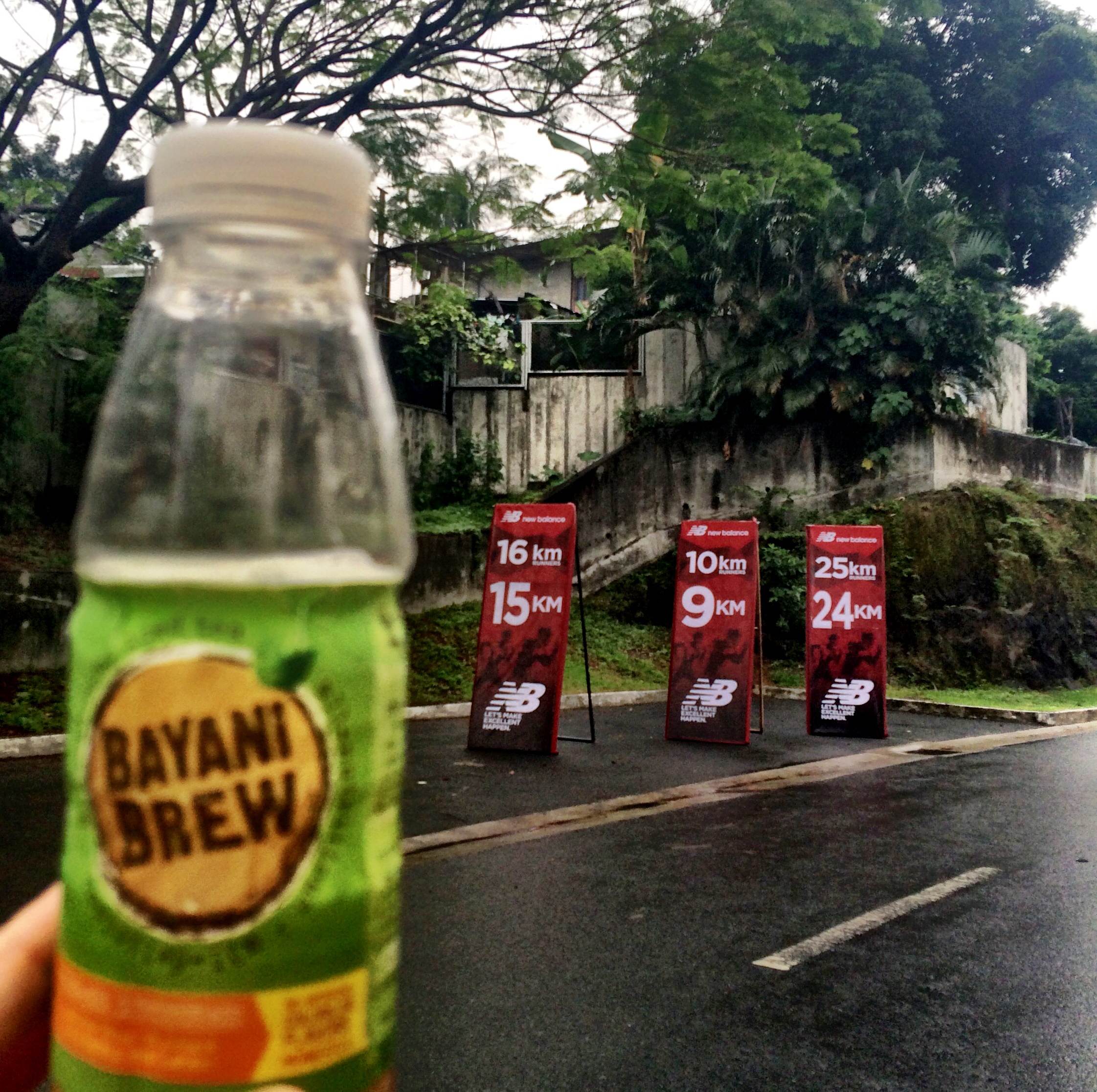
Breakfast on Race Day: I eat a full breakfast with mostly rice and fish. My trainer calls it “pagkaing mahirap” (food for the pauper). I also take a banana, hot choco and a couple of salt capsules, especially if I expect to run in warm weather. I also start drinking my race day hydration concoction composed of water, Gatorade, a couple of dissolved salt capsules and chia seeds. Sometimes I replace Gatorade with Bayani Brew, my favourite all-Filipino all-Natural iced tea. I usually bring a bottle of this special drink.
IMG_4089

My special Bayani Brew concoction with water, chia seeds and salt capsules.

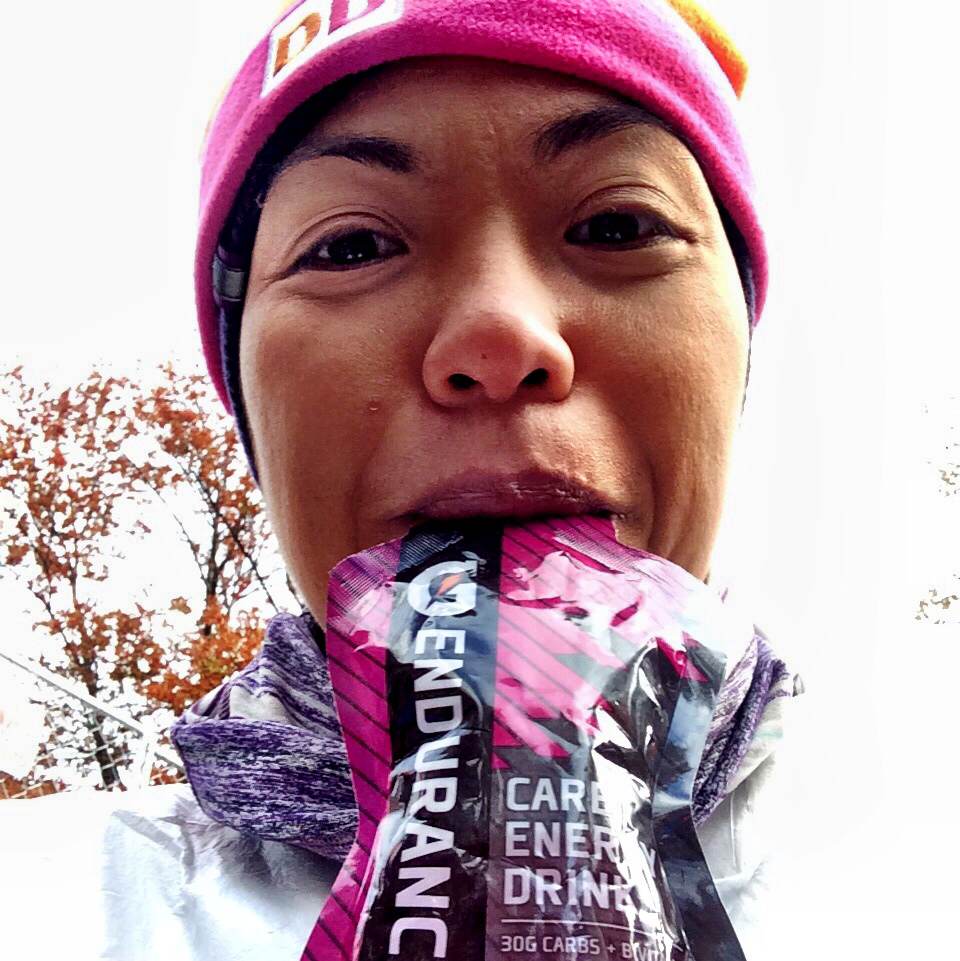
15 minutes Before the Race: I take one energy gel with my drink to give me a good starting boost.
IMG_3961

I think I ate all kinds of food available at the New York Marathon starting village including this energy drink 15 minutes before the race.

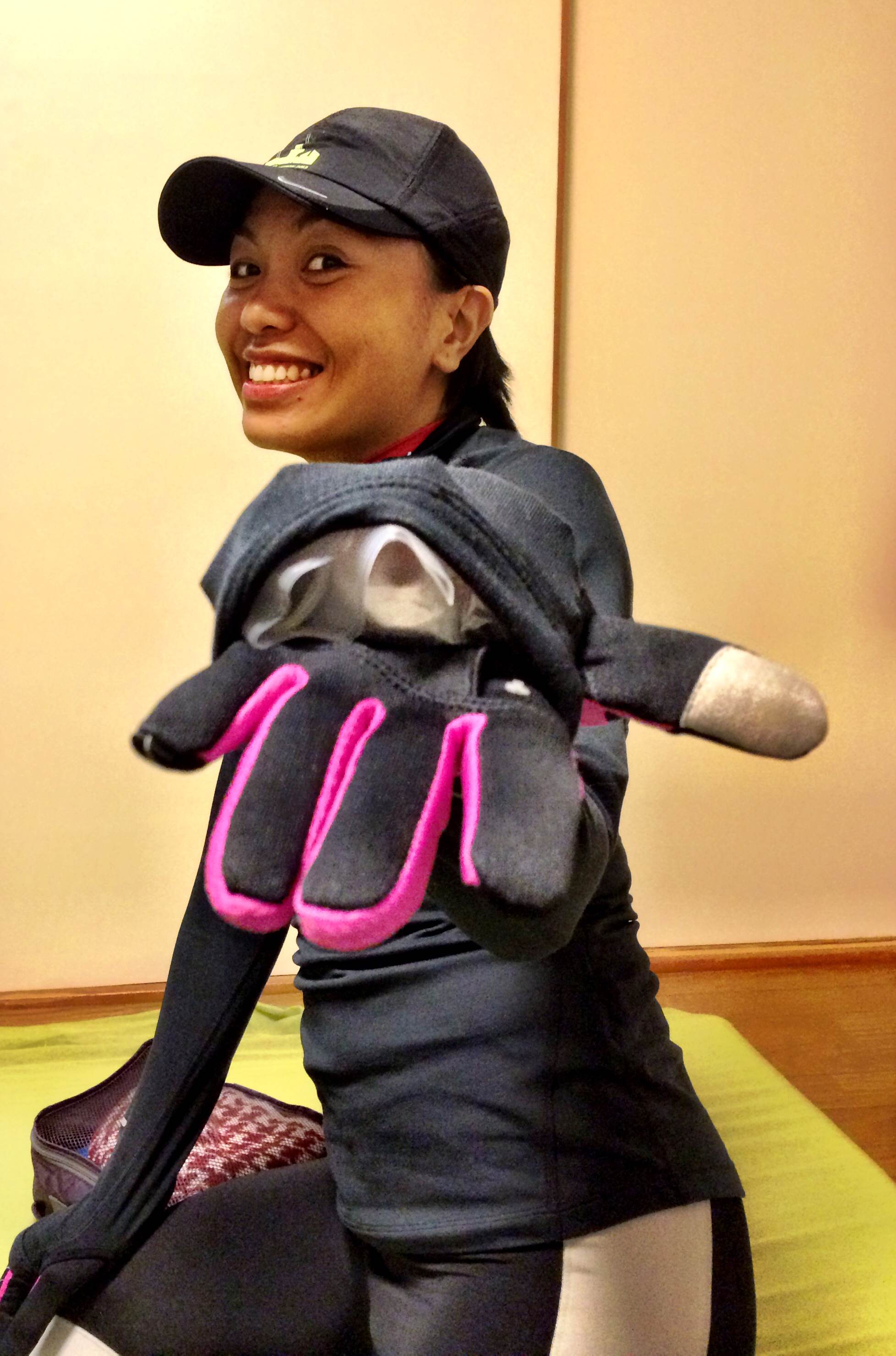
During the Race: I try to vary what I eat during the race. On my first hour, I take a Kind Fruit and Nut Bar. Then I take a Clif Bar on the second hour followed by a Chia Bar on the third hour. I have also tried eating sushi, pizza, onigiri balls and rice cake during a race. I am lucky that my tummy can take different kinds of food while running. Beyond three hours I take an energy gel with water every 30-40 minutes since at this point the body will start to have difficulty digesting and processing real food.

IMG_3739

My race day spread

IMG_2506

Yes I’ve been caught eating pizza on the run.
IMG_0448

Onigiri balls hidden in my running gloves for the Tokyo Marathon.

I drink at every station and alternate between water and energy drink.

I am a believer that nutrition is a big factor for a successful race. So far this race day menu has worked for me and I have not hit a wall because of this. I have also avoided getting cramps except for New York which was mostly due to the cold and my body not being used to a prolonged fast pace.

AFTER THE RACE

Within 30 Minutes After Finishing: I take a recovery drink of chocolate milk plus water. If there is beer at the finish line (like in Berlin and Chicago), I take that too :). I also eat the complimentary fruit.

2-3 Hours After the Race: I have a celebratory high protein meal like a burger or a salmon fillet. I wouldn’t mind dim sum too 🙂 I make sure that I also take fruits or smoothies that boost the immune system like berries. My body went through a lot of stress during the race and it’s easy to catch something right after because of this.

I highly recommend that you incorporate your nutrition in your training and not just wing it on race day. You have to know what works for you and listen to your body as you take in different kinds of food. Make it interesting so that you look forward to running for several hours, knowing that you will open a yummy treat every hour of racing. Happy eating on the run!
IMG_3712

Eat well, run well.

Overcoming Work-Life Woes

Over the years, I have been plagued by work-life woes as I try to balance the demands of work, family, training, volunteer work, etc. But I am happy that for more than a year now, I have come to accept that there is really no such thing as work-life balance and  that I will just get tired trying to seek this state. It is just like waiting for Godot.

What I have been striving for instead is a work-life flow where all aspects of my life flows seamlessly into each other, where everything is just LIFE. There is no distinction but each component is given the time and the focus that it deserves. There is no struggle because you only make time for those things that matter. So work matters, give it its much deserved attention. Family is important, carve out its own time. Training fuels your passion for life, make time for it.  This just means that yes you can have it all, but not at the same time.

So let me just share some of the things I have been practicing to try to make this work:

Build Habits

I think this is my most powerful learning. If you want to get better at something or if you want to grow a specific aspect of your life, rigour is very important. You keep at it even if at the start you seem to not be going anywhere. The act of doing something repeatedly is progress by itself. The goal is not perfection but practice. If something is important, it is worth doing at least 3x a week.

Have a schedule, have a routine and you will have more freedom to use your time. This may seem like two opposing thoughts but you actually can be more flexible with the use of your remaining time if you know that you have eked out precious time for your must-dos.

For instance, the only reason I was able to train for triathlon is by weaving it into a schedule that works for me. I am a morning person so I wake up at 5am every day to train at a gym that is accessible from where I work. I know that nothing beats outdoor training but I wouldn’t be able to work this out into a routine so I have mustered all my willpower to swim in a 4ft pool, bike on the trainers and run on a treadmill. Since I do my trainings first thing in the morning, I have the entire day to focus on work and the evenings are free for family and some socials.

Focus

I am no longer a believer of multitasking. Having too many things at the same time leaves you with a lot of half-baked work. The time spent to transition from one task to another is wasted resource and you end up more exhausted. I think it is Leo Babauta of Zen Habits who spoke about spending 90 minutes to complete a specific task without any distractions.

Prioritization is key to focus. If it is worth doing, it deserves your focus. It is too easy to get busy with all the little things and we mindlessly wade through all our tasks without assessing what is truly important. That is why we are all over the place and end our days feeling drained of all our energy.

At work, I try to keep my focus on three major tasks a day. I chunk my day so I spend time on each of these tasks. I try not to chat or get distracted by social media, text messages, email, etc when I am fully immersed in an activity and I strive to finish before I move on to the next task. Admittedly I am still a work in progress on this.

Being Mindful

Related to focus is always being clear about why we are doing things. Sometimes we charge on with our tasks without thinking of the intent, whether it is even necessary to do these. It does not hurt to pause and ask whether the steps we are taking still make sense in the overall scheme of things. It is easy to just continue doing the things we are used to instead of stopping to check whether these methods still achieve the goals we set out to accomplish.

This may seem like a mundane example but let’s take grocery shopping. I know the grocery lay-out like the back of my hand and I can just be on autopilot mode, buying the same things every single time. But as we try to practice being more mindful with what we eat and consume, I try to shake things up a bit and incorporate into my basket of goods more of the healthy stuff since our overall intent is to nourish our body with good fuel. We super love good food and indulge from time to time but when we do, we know that it is a treat that is enjoyed sparingly.

Work-Life Flow is something that I want to learn more about and I shall share whatever I gather on this topic on this blog.

photo

“The goal is practice, not perfection”… from Teacher Tessie Anderson, yoga instructor at this quaint studio up in Baguio.

How You Can Afford to Travel – 5 Easy Steps

I grew up very poor and only took my first plane ride when I was 22 years old. The year after that, I went on my first trip out of the country, to Singapore. So that explains my thirst for travel. After getting bit by the travel bug and after visiting over 50 cities,  I can only live a life marked by wanderlust.

I have always been asked how I can afford to travel a lot considering I am earning average middle manager income. We are a regular working class family but somehow we have been able to go places with what we had. I have always been open to friends and colleagues about how we managed to do this so allow me to share some of my favourite travel hacks and best practices we have used over years. Some of the tips we have shared as well in our Travel Hacking article for Revel Magazine.

Prioritize What You Spend On

It’s easy to just spend mindlessly on big and small things so it pays to know what truly matters to you. Travel is important to me so I choose to spend on this. I rarely shop for shoes, bags and clothes and if I do, I never buy anything at full price. Clearance is my best friend. However I would willingly spend on high impact experiences while traveling (culinary tours, off-the-beaten adventures, etc).

It will also help to pack your lunch and refrain from eating out a lot. You may not notice it but the lunch meal tab plus the Starbucks and dessert adds up over time. We love to eat out and enjoy going on dates and dinners with friends. but we try to keep this at a manageable level by employing some money saving techniques. For instance, we have early dinner at home before going out for after dinner drinks or dessert.

Financial blogger Ramit Sethi said, “Spend money extravagantly on the things that you love, and cut costs mercilessly everywhere else.” If you’re a travel hacker, that means optimizing where every peso of your travel budget goes. So this also means that we don’t give each other expensive gifts on our birthdays; instead we go on trips and spend on having memorable experiences.

Screen Shot 2014-11-26 at 7.20.27 AM

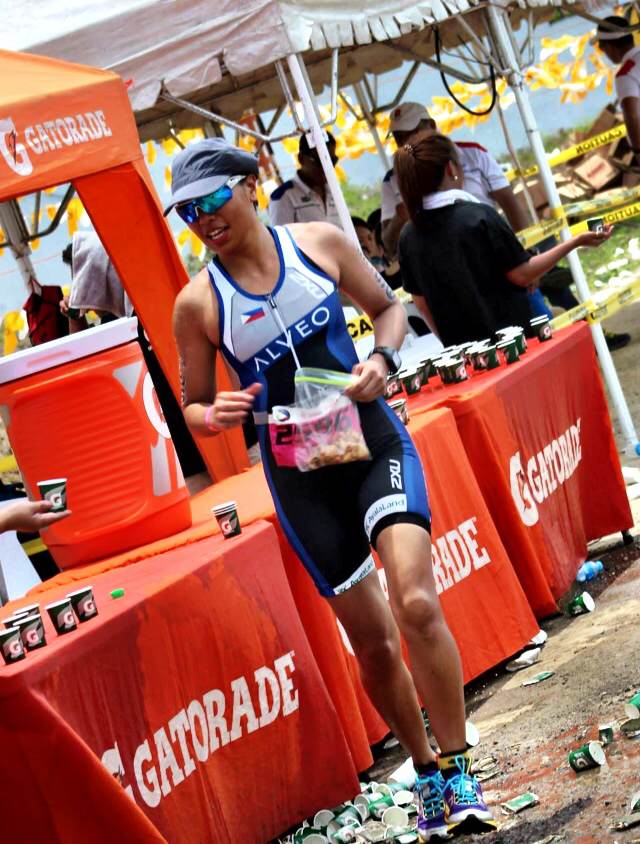
I love running, I love travel and choose to spend on these things.

Screen Shot 2014-11-26 at 7.19.51 AM

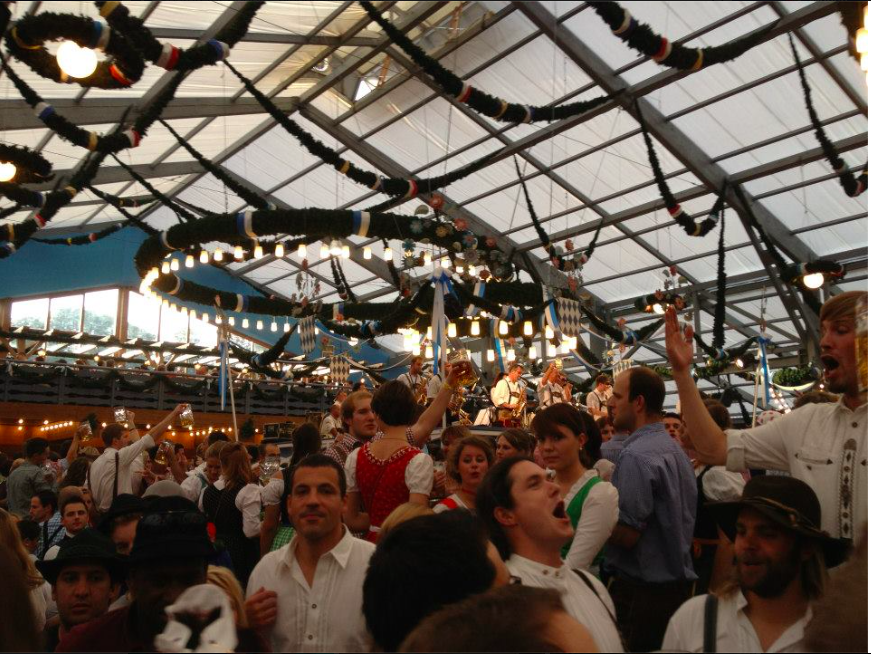
We love one-of-a-kind experiences like Munich’s Oktoberfest. The beers are a bit more expensive during this time but there is nothing like being part of the world’s biggest party.

Set a Travel Budget

It may seem counterintuitive but having a budget set for the year has given us more freedom to make travel decisions. With a set budget you can choose to go on a few major trips or several small ones and not just charge blindly. Since you know your budget, you can plan better and plan ahead. Related to this, its good to have a separate travel savings bucket so you know how much to set aside on a regular basis. Making travel a part of your monthly savings will allow you to build your fund steadily and consistently.

Maximize Mileage Programs

For the past five years we have never paid full price for long haul flights. We have been loyal users of the Platinum Premier Miles card of Citibank and have been able to maximise it’s mileage program. What is good about this card is that you can convert it to miles of most airlines. So we combine miles earned with actual miles flown to get award tickets. We have flown to the US and Europe at very minimal cost. because of this. We also only choose airlines that are part of the same mileage program so we can accumulate miles faster.

Go for Great Deals and Book Early

I am a morning person and am usually asleep by 10PM but I stay awake for seat sales. I can’t count anymore how many times I have booked flights at dawn to get first dibs on these promo fares. I think the best deal I have ever bought was from Cebu Pacific for three Manila-Osaka roundtrip tickets for a total of Php 3,600 including all taxes. These flights are months (or even a year) in advance so it gives you sufficient time to plan for the trip and even take advantage of accommodation deals since you already know when you will travel.

I also go to travel fairs to avail of highly discounted accommodations for flights that we have booked in advance. I usually have a list of hotels/resorts to check out at the fair so I don’t aimlessly walk around and impulsively buy anything just because it is cheap.

Screen Shot 2014-11-26 at 7.24.15 AM

Tickets for three to Japan for Php 3,600. Not bad at all 🙂

Try Alternative Accommodations

When it comes to accommodations while traveling, look for local accommodations instead of a hotel. We discovered AirBNB.com in 2010 while traveling around the US, and staying at locals’ apartments was a very rewarding experience. Our hosts were always very friendly, gave us tips on where to go off the usual tourist path, and the prices were lower than what you’d get for a hotel in the same area. Since you stay where the locals live, you can usually find interesting and cheaper dining places, groceries, markets, etc. It also gives your trip a bit more local flavour.

Screen Shot 2014-11-26 at 7.19.32 AM

Our Airbnb host lent us traditional Bavarian wear for the Oktoberfest and even helped in fixing us up for the party.

These tips are nothing fancy nor extraordinary but have worked for us consistently. I will try to share more of these as I build this blog.

BONUS: Join Contests

Airline companies launch promos and contests and the mechanics are usually simple. There’s no harm in joining these. I am believer because last year I won two round-trip tickets to Europe via KLM 🙂

Screen Shot 2014-11-26 at 7.18.29 AM

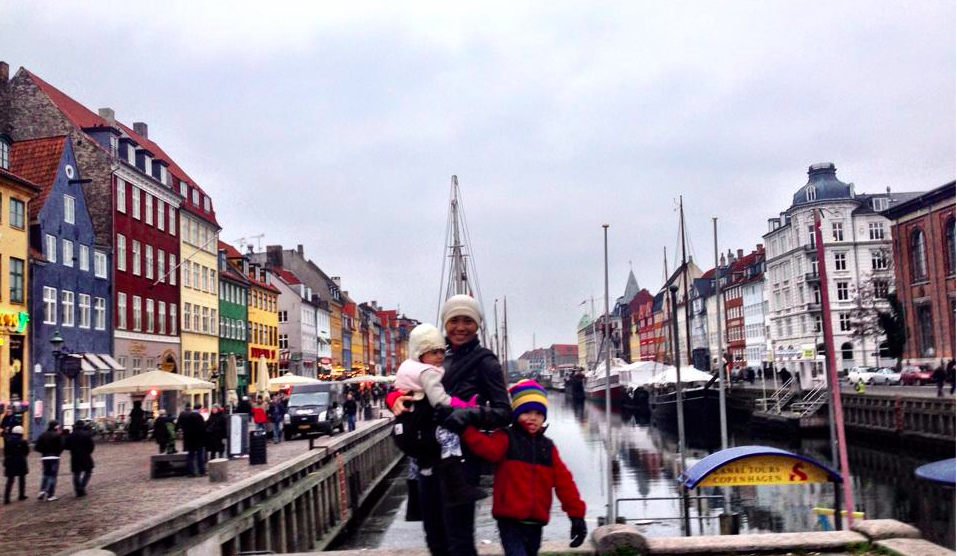
Free flights to Europe for a wintery post-Christmas trip.